
Thanksgiving is almost here, which means we’re getting close to one of my favorite parts of fall. I love getting time to spend with family and enjoying good food. I’m not even an adequate cook, but I have a lot of family members who enjoy cooking, which I’m very happy about 🙂
I find it interesting how many ancient cultures had their own traditions surrounding the harvest. And honestly it makes perfect sense. Long before grocery stores and supermarkets, a successful harvest could mean the difference between having enough food for the winter and going hungry.
So even though our modern Thanksgiving celebrations here in the United States are very different from ancient harvest festivals, I thought it might be fun to open up my favorite giant mythology book and find a few gods who were associated with growing food, the changing seasons, and the abundance of the earth.
Some of them are familiar, while others might be a little less well-known.
Here are five gods I think are interesting to know this harvest season.
Demeter: The Mother of the Harvest
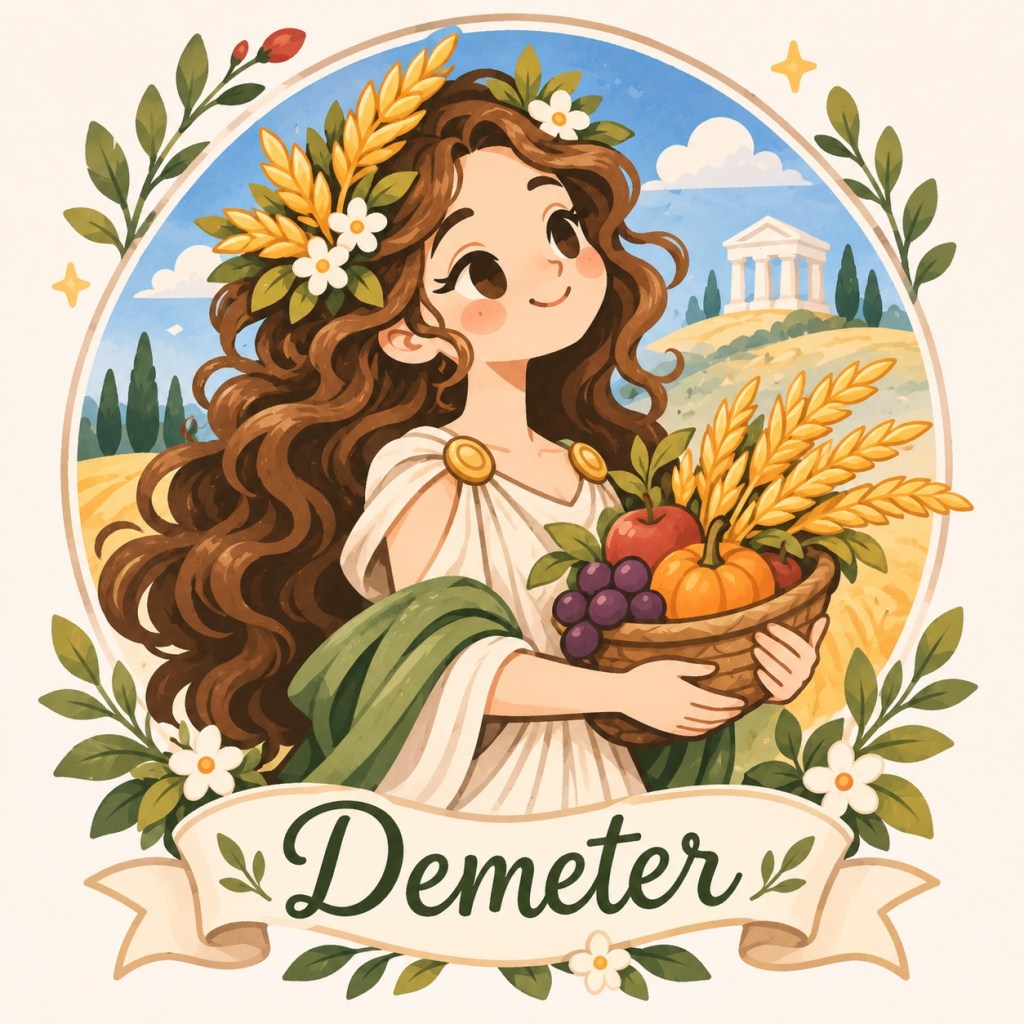
If we’re talking about harvest gods, we really have to start with Demeter.
In Greek mythology, Demeter was the goddess of agriculture, grain, and the fertility of the earth. She was especially important to people who depended on growing crops, which, in the ancient world, was just about everyone.
But Demeter is probably best known for the story of her daughter, Persephone.
When Hades took Persephone into the Underworld, Demeter was devastated. She searched everywhere for her daughter, and in her grief, she allowed the earth to become barren. Crops stopped growing, and humanity faced starvation.
Eventually, an arrangement was made that allowed Persephone to return to her mother for part of the year.
The story became closely associated with the changing seasons and the cycles of growth and dormancy.
What I find especially interesting about Demeter is how personal her mythology feels. She’s an incredibly powerful goddess, but her best-known story is about a mother who desperately wants her daughter back.
It’s also a reminder of just how important agriculture was to the ancient Greeks. Without Demeter’s gifts, even the gods would have had a problem, since there would have been no harvests for mortals to offer them.
Ceres: A Roman Goddess Worth Celebrating
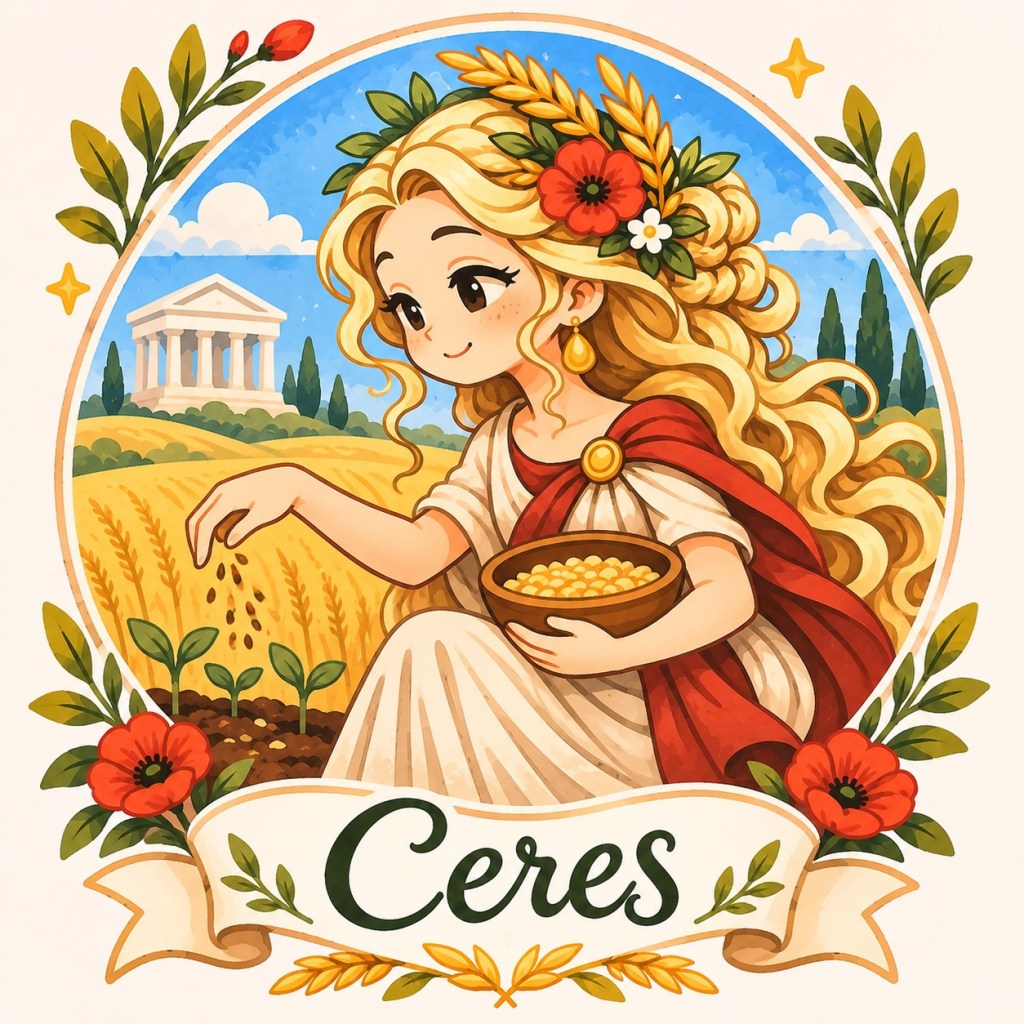
Next is Ceres, the Roman goddess of agriculture, grain, and the harvest.
If she sounds familiar, that’s probably because she has quite a bit in common with Demeter. The Romans identified the two goddesses with one another, and their stories became closely connected.
But Ceres also had an important place in Roman religious life.
She was particularly associated with the cultivation of grain and the well-being of ordinary people. Her worship was connected with the plebeians, or common citizens of Rome, and she was honored during a festival called the Cerealia.
The Cerealia took place in April, rather than during our autumn harvest season, but it celebrated a goddess whose influence was essential to keeping people fed.
And here’s a little piece of trivia I love: our word cereal comes from Ceres.
So the next time you’re pouring yourself a bowl of cereal, you’re using a word that has its roots in the name of an ancient Roman goddess.
Renenutet: The Egyptian Protector of the Harvest
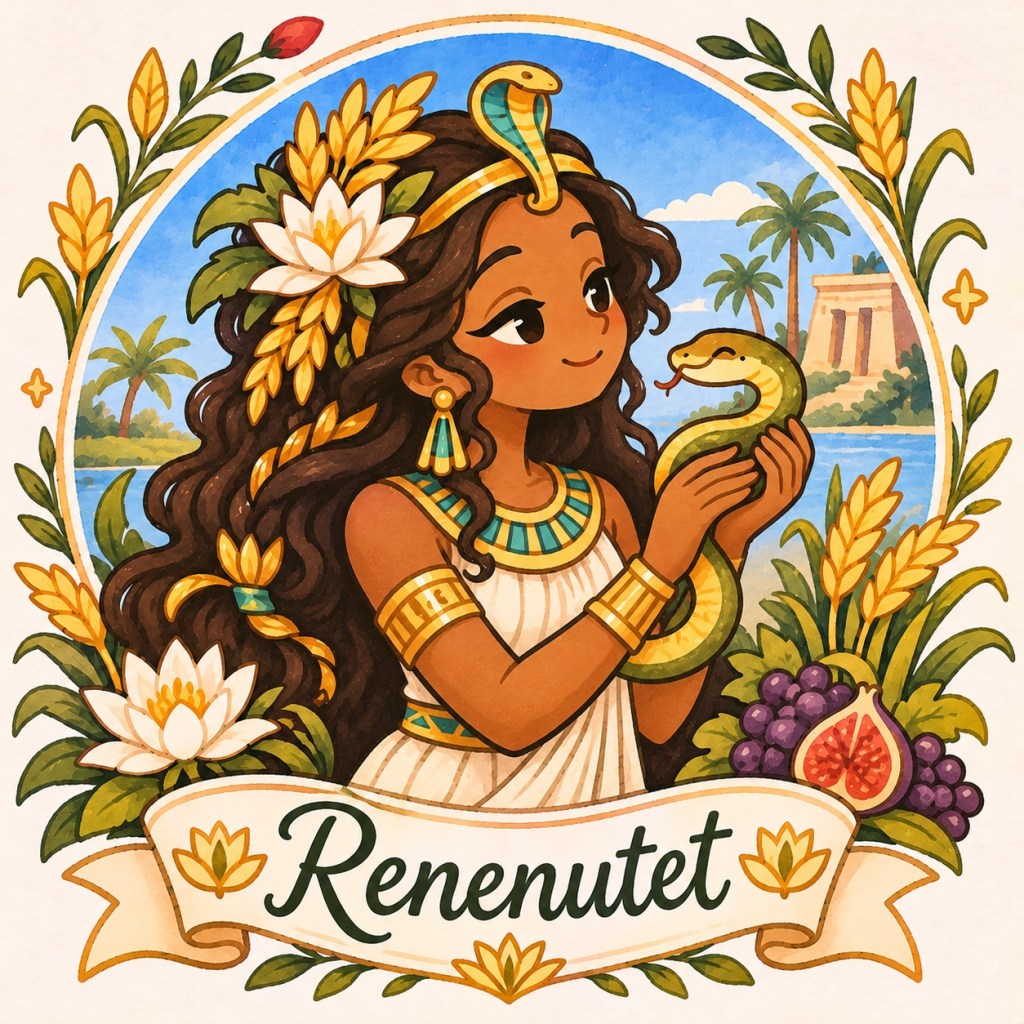
Renenutet was a new favorite for me while putting together this list.
She was an ancient Egyptian goddess associated with nourishment, fertility, and the harvest. She was also connected with the protection of stored grain, which was especially important in a society that relied so heavily on agriculture.
One of the things that makes Renenutet particularly interesting is that she was often depicted as a cobra, or as a woman with the head of a cobra.
That might seem like an unusual choice for a goddess associated with food, but snakes could actually be helpful around granaries because they preyed on rodents that might otherwise eat the stored grain.
Renenutet’s protective role made her an important figure in ensuring that the harvest wasn’t just successful, but that the food would remain safe afterward.
I like that distinction.
Growing enough food is one thing. Keeping it safe so that everyone can eat is another.
Freyr: A Norse God of Prosperity
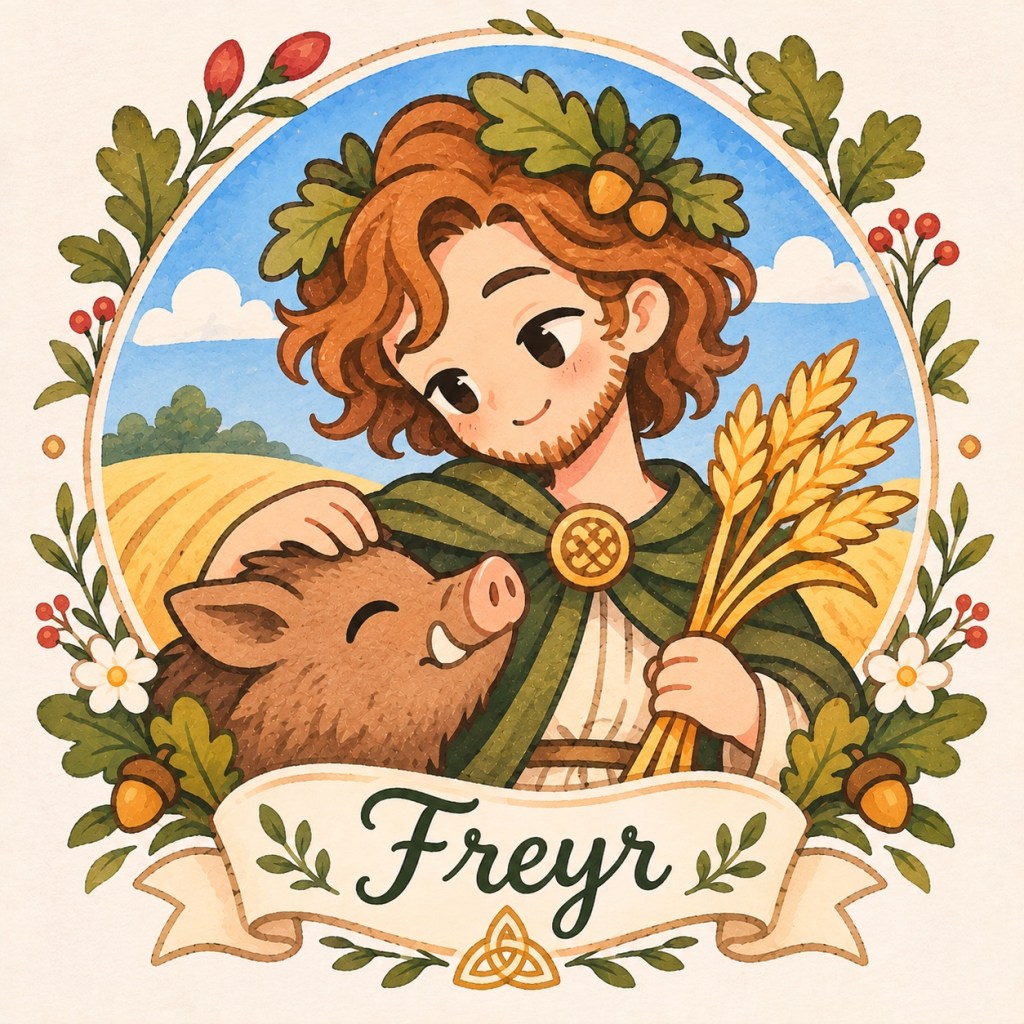
Freyr brings us to Norse mythology.
He was associated with fertility, prosperity, peace, and favorable weather, all things that were especially important to communities depending on successful crops and livestock.
Freyr belonged to the Vanir, a group of Norse gods often associated with fertility and prosperity. He was also the brother of Freyja, another well-known figure in Norse mythology.
One of Freyr’s most interesting possessions was Gullinbursti, a magical boar whose name means “Golden Bristles.”
According to Norse mythology, the boar had bristles that shone brightly enough to illuminate the darkness.
Freyr was also associated with good harvests and peaceful times, which makes him a particularly appropriate figure for this season.
After all, a successful harvest wasn’t simply about having plenty of food. It meant security, stability, and the hope that a community would make it through another winter.
Saturn: More Than Just a Planet
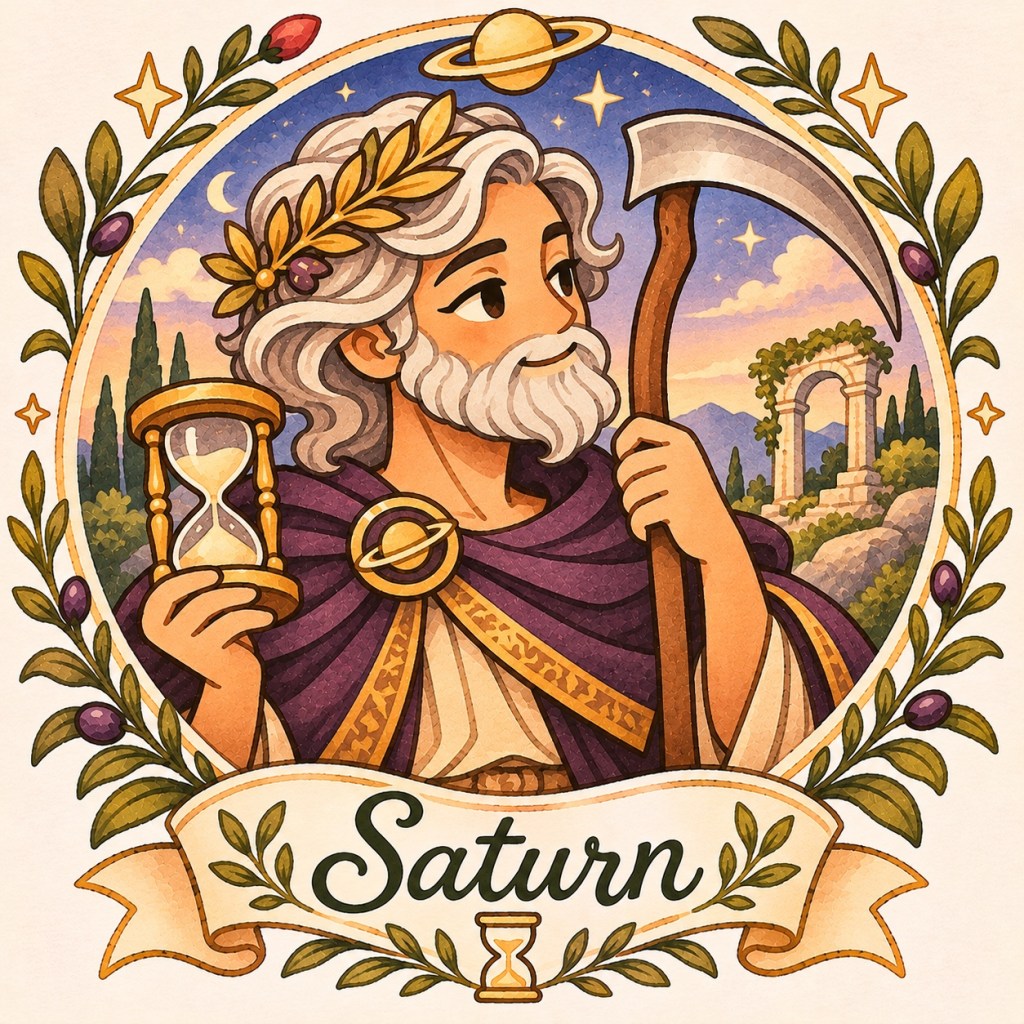
Last on our list is Saturn.
Most of us probably think of the planet with the beautiful rings when we hear his name, but Saturn was also an ancient Roman god associated with agriculture and sowing.
He was connected with a legendary Golden Age, a time when people were believed to have lived in peace and abundance.
Saturn is also famous for the Saturnalia, a Roman festival held in December.
Saturnalia was a time of feasting, gift-giving, and celebration. Some ordinary social rules were relaxed, and the festival became one of the most popular events on the Roman calendar.
Although Saturnalia wasn’t a Thanksgiving celebration, I can see why a festival centered on feasting and abundance might feel familiar to us today.
I think it’s interesting that people thousands of years ago also looked forward to gathering together, enjoying good food, and taking a break from everyday responsibilities.
The enjoyment of a good feast seems to be fairly universal.
Gratitude for the Season
One thing that really stood out to me while looking into these gods is how deeply the harvest was woven into everyday life.
Today, it’s easy to forget how much effort and care goes into growing and producing the food we eat. For ancient communities, a good harvest was something worth celebrating because their lives and futures depended on it.
And although these gods came from different cultures and traditions, their stories reflect some very familiar hopes to us today. We all wish to have enough food on the table, a safe home, healthy families, and some moments of peace in an unpredictable world.
I think those are things most of us can still appreciate.
So no matter what you’re up to these last few weeks of fall, I hope you find something to be thankful for this season. If you feel like sharing, I’d love to hear what you’re grateful for or how you like to celebrate this time of year.
Happy Thanksgiving!
Love, Winter🖤

